Metalmol: A Horror Metal Blackletter for Bold Branding
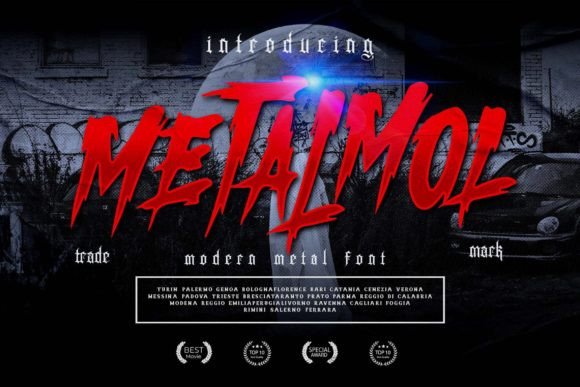
There is a specific kind of project that demands more than just legible text—it demands atmosphere. When you are designing for a tattoo parlor, a vintage motorcycle shop, or a heavy metal band, a standard serif font or clean sans serif font often falls flat. This is where Metalmol enters the picture. It is not merely a typeface; it is a statement piece. As a distinct, highly detailed Horror Metal Font, Metalmol offers that raw, retro-urban edge that many modern designers struggle to find in standard design assets.
I have seen countless designers try to force a corporate font to look "edgy" by adding grunge overlays, but the result usually looks inauthentic. Metalmol solves this problem by providing a foundation rooted in the Blackletter tradition but twisted into a horror aesthetic. It captures a vibe that feels lived-in, gritty, and unapologetically loud. For anyone working on logo design or brand identity for a counter-culture client, understanding how to wield this font is essential.
Deconstructing the Visual Personality of Metalmol
At its core, Metalmol is a display font. You would not use it for body copy in a long-form article, nor should you. Its strength lies in its intricate detailing. The letterforms feature the sharp, angular strokes typical of Gothic calligraphy, but they are distorted and textured to resemble something forged in iron or scratched into wood. This creates a sense of movement and aggression that static fonts lack.
The "Horror Metal" aspect is key here. Unlike traditional Old English scripts that might feel historical or regal, Metalmol feels dangerous. It brings to mind the aesthetic of 1980s horror movie posters and classic thrash metal album covers. For a creative font, it has a very specific personality: it is loud, visceral, and textured. If your project requires a sense of history but with a dark, rebellious twist, this font bridges that gap perfectly.
Strategic Applications: Where Metalmol Shines
Knowing where to deploy a premium font like Metalmol is half the battle. Because of its high level of detail, it works best in environments where it can be displayed at larger sizes without losing its impact.
Tattoo Business Branding and Signage
The tattoo industry thrives on custom artwork and distinct personality. Metalmol is an immediate fit for this niche. It mimics the complexity of hand-drawn tattoo lettering, making it an excellent choice for shop signage, appointment cards, and merchandise. It signals to potential clients that the shop values traditional roots but embraces a darker, modern style.
Logo Design and Brand Identity
If you are building a brand identity for a craft brewery, a hot sauce company, or a vintage clothing line, Metalmol can serve as the anchor. It provides instant recognition. However, a word of caution from a practical standpoint: ensure the brand voice matches the font. A "Horror Metal" font on a children’s daycare logo is a mismatch, but on a micro-brewery label, it suggests a robust, handcrafted product.
Editorial and Packaging Design
In editorial design, Metalmol is perfect for drop caps or feature headers in magazines focused on alternative culture, music, or horror fiction. Similarly, in packaging design, it can make a product pop on a crowded shelf. Imagine a hot sauce bottle with a dripping, metallic header—it immediately communicates heat and intensity before the customer even reads the ingredients.
Technical Considerations and Font Pairing
One of the most common mistakes I see with heavy display fonts is poor pairing. Metalmol is visually dense. If you pair it with another decorative or script font, the result will be chaotic and unreadable. The golden rule for font pairing is contrast.
Because Metalmol is a blackletter font with high texture, it requires a clean, simple partner. A geometric sans serif font is usually the best choice. Think of fonts like Montserrat, Roboto, or Bebas Neue. These clean lines allow the eye to rest after viewing the complex shapes of Metalmol. You want the header to scream, and the sub-header or body text to whisper the details clearly.
Readability and Visual Hierarchy
When using Metalmol, you are establishing a strict visual hierarchy. It demands attention. Use it for the H1 or the main headline, then drop down to a standard weight for everything else. This contrast actually improves readability because it organizes the information for the reader. They instantly know what the topic is (the Metalmol text) and where to go for the details (the supporting text).
Also, consider the medium. In web design, ensure the font is rendered at a size where the "horror" details don't turn into muddy pixels. On mobile screens, extremely intricate fonts can lose legibility if scaled too small. Test your layouts on multiple devices to ensure the artistic integrity holds up.
Evaluating the Project Fit
Before you commit to using Metalmol, run a quick "vibe check" on your project goals. Ask yourself: Does this brand want to feel safe and corporate, or does it want to feel raw and authentic?
- Commercial Use: Always verify the licensing of any commercial font. Metalmol typically comes with a license that covers social media graphics, merchandise, and print, but reading the fine print protects your client and your business.
- Project Scope: This font is excellent for short, punchy copy. Think band names, book titles, or menu headers. It is not designed for legal disclaimers or long paragraphs.
- Audience Connection: For the 20–50 demographic that appreciates retro-urban aesthetics, this font triggers nostalgia for the grunge era, metal culture, and underground zines. It connects on an emotional level that sterile, modern typography often cannot.
Final Thoughts on Implementation
Metalmol is a powerful tool in the right hands. It brings a level of craftsmanship to logo design and packaging that generic fonts simply cannot replicate. It allows entrepreneurs and creators to carve out a niche that feels distinct and memorable. Whether you are working on a horror novel cover, a band poster, or a retro clothing line, this typeface provides the heavy, metallic aesthetic required to stand out.
Treat it with respect, pair it wisely, and let its intricate details do the heavy lifting for your visual storytelling. When used correctly, Metalmol