Old Finlander: Victorian Elegance for Modern Design Projects
Finding a premium font that captures historical charm without feeling outdated is a common challenge for designers and brand builders. Old Finlander steps into that space as a display font with deep Victorian roots. It's not just a collection of letters; it's a design asset built with ornamental detailing that immediately sets a specific mood. If you are working on a project that requires a touch of sophistication, heritage, or dramatic flair, understanding how to use this creative font effectively can transform your work from standard to striking.
The Visual Character of Old Finlander
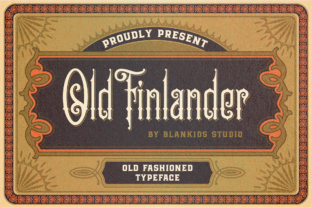
At its core, Old Finlander is a serif font, but it moves far beyond the simplicity of Times New Roman or Garamond. The Victorian era was known for its love of decoration, and this typeface embodies that spirit. You will notice intricate curves, high contrast between thick and thin strokes, and subtle flourishes that give the letters a handcrafted feel. It carries the weight of history but maintains a clarity that works in contemporary settings.
When you look at the anatomy of the font, you see the influence of 19th-century typography. There is a distinct personality here—it feels authoritative yet artistic. Unlike a standard sans serif font, which prioritizes neutrality, Old Finlander demands attention. It is the kind of typeface you use when you want the text to be part of the visual art, not just a vessel for information. It pairs exceptionally well with clean, modern typography, creating a balance between the ornate and the functional.
Where Old Finlander Fits Best
Because Old Finlander is a display font, it shines brightest in applications where text is used for impact rather than long-form reading. Think of it as the headline act, not the background singer.
Branding and Logo Design
For businesses in the luxury, artisan, or heritage sectors, this font is a strong contender for logo design. Imagine a craft brewery, a bespoke tailor, a high-end coffee roaster, or a vintage clothing line. Using Old Finlander in their brand identity instantly communicates quality and tradition. It tells the customer that the brand values craftsmanship and detail. However, for logo design, always ensure the letterforms are legible at very small sizes, as the intricate details can sometimes blur if scaled down too much.
Packaging and Editorial Design
In packaging design, shelf appeal is everything. Old Finlander works beautifully on labels for wine, spirits, gourmet foods, or cosmetic products. The ornamental style adds perceived value to the product inside. Similarly, in editorial design, it can be used for magazine covers, book titles, or chapter headings. It sets a mood of seriousness or classic storytelling, making it perfect for historical fiction covers or lifestyle magazines focusing on tradition.
Digital and Social Media
While it is a historical style, Old Finlander adapts surprisingly well to modern web design and social media graphics. In a digital landscape dominated by minimalist geometric fonts, a Victorian display font stands out. It is excellent for hero section headlines on websites, promotional banners, or Instagram quotes where you need to grab a user's attention instantly. Just be mindful of loading times if you are using it as a web font—ensure it is optimized for performance.
Influence on Perception and Engagement
Typography influences how people feel about a message before they even read the words. Old Finlander influences visual hierarchy by naturally drawing the eye. When used for a headline, it anchors the page and provides a strong starting point for the reader's journey.
For brand perception, using a premium font like this suggests stability and established credibility. It moves a brand away from looking "startup-ish" or generic toward feeling established and trustworthy. In terms of audience engagement, unique typography can increase dwell time on a page or packaging because people pause to admire the lettering. It adds a layer of texture and personality that standard system fonts simply cannot provide.
Practical Guidance for Designers and Creators
If you are considering integrating Old Finlander into your toolkit, here are some practical tips to ensure success.
Evaluating Project Fit
Before selecting this typeface, ask yourself about the voice of your project. Is it modern, minimal, and corporate? If so, Old Finlander might clash. Is it artisanal, narrative, bold, or historical? If yes, it is likely a perfect fit. It works best when the subject matter allows for a bit of drama and elegance.
Font Pairing Strategies
The key to using a decorative serif font is contrast. Avoid pairing Old Finlander with other ornate fonts, such as a complex script font or a busy handwritten font. The result would be visual chaos. Instead, pair it with a neutral sans serif font for body text. A clean sans serif allows the display font to be the star while ensuring the main content remains highly readable.
Readability and Hierarchy
Use Old Finlander for H1, H2, or H3 headings. Do not use it for paragraphs of text. Display fonts are designed for impact at large sizes; using them for body copy often leads to poor readability and a cluttered look. Establish a clear hierarchy where the Victorian font introduces the topic, and a simpler font carries the detailed information.
Licensing and Usage
Since Old Finlander is a commercial font, you need to verify the licensing terms. Most premium fonts require a license for commercial use, such as in client logos, merchandise, or app interfaces. Ensure you purchase the correct license type (desktop, web, or app) to avoid legal issues down the road. Check if the font includes different styles or weights, as having a bold or italic version can be helpful for expanding your visual hierarchy options.
Ultimately, Old Finlander is more than just a typeface; it is a design statement. By applying it thoughtfully, you can leverage its Victorian elegance to create brand identity systems, editorial design layouts, and social media graphics that feel both timeless and intentional. It bridges the gap between the past and present, offering a reliable tool for designers who want to add depth and character to their work.