Skull Party: A Playful Color Font for Halloween Projects
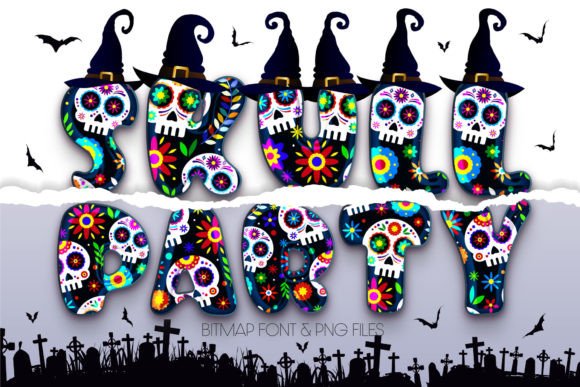
There’s a particular challenge every designer faces around Halloween: finding a typeface that’s festive without being cliché, fun without sacrificing clarity. Skull Party addresses that directly. It’s a color font—a modern typographic format—featuring cute skulls and witch hats integrated into each letterform. The result is a typeface that feels authentively playful, not gimmicky. If you’re working on seasonal branding, event invitations, or social media content, this font offers a distinct visual personality that’s hard to replicate with standard typefaces.
Understanding Color Fonts and Where They Shine
Unlike traditional fonts that rely on single-color outlines, color fonts like Skull Party embed multiple colors, gradients, and even textures directly into the glyph data. This means the decorative elements—those little skulls and hats—render consistently across supported applications without requiring manual layering or additional design work. The technology behind OpenType-SVG fonts has matured significantly, making them a practical tool for designers who want to streamline their workflow while achieving complex visual effects.
Skull Party works best in contexts where personality and thematic alignment matter more than minimalist restraint. Think Halloween party invitations, themed merchandise, seasonal blog headers, social media graphics for October campaigns, or packaging for limited-edition products. The font’s charm lies in its balanced execution: the skulls are recognizable but not grotesque, the witch hats add whimsy without overwhelming the letter structure. This makes it suitable for audiences ranging from children’s event promotions to adult-oriented Halloween gatherings.
It’s worth noting that Skull Party is a display font, designed for headlines, logos, and short text passages rather than body copy. Pairing it with a clean sans serif or serif font for supporting text creates visual hierarchy while maintaining readability. A simple geometric sans serif complements Skull Party’s playful energy without competing for attention, while a traditional serif can add sophistication if the project calls for a more refined aesthetic.
Practical Applications Across Creative and Commercial Projects
For designers and brand strategists, Skull Party offers a unique opportunity to inject seasonal character into brand identity without a complete visual overhaul. A bakery launching a Halloween menu, a boutique releasing limited-edition packaging, or a content creator building themed social media templates—all can use this font to signal seasonal relevance while maintaining brand consistency. The key is intentional application: using Skull Party for primary headlines or logo elements while relying on established brand fonts for supporting copy.
In editorial design, the font serves well for magazine covers, newsletter headers, or blog post titles during the Halloween season. Its visual density makes it effective at larger sizes where the decorative details become part of the reading experience. For digital applications like website banners or email campaigns, ensure the font is embedded correctly and test rendering across devices. Since Skull Party is a premium font in the color font category, verifying compatibility with your software stack is a practical first step—it functions seamlessly in Photoshop, Illustrator, Silhouette, and Inkscape.
Crafters and hobbyists will find it particularly useful for personal projects like custom party decorations, scrapbooking, or DIY signage. The font’s inherent playfulness reduces the need for additional graphic elements, which simplifies production. For small business owners, it’s a commercial font that can elevate seasonal marketing materials without commissioning custom illustration. Just confirm that your production tools support OpenType-SVG fonts before committing to the workflow.
Evaluating Fit, Pairings, and Readability
Choosing any creative font requires evaluating it against your project’s specific needs. With Skull Party, consider the following: What’s the primary context? A logo design demands different treatment than a social media graphic. How will it interact with existing visual elements? Test the font alongside your brand’s color palette and imagery. Does the tone match your audience? Skull Party’s cute, approachable style works well for family-friendly events but might feel too whimsical for formal or corporate Halloween communications.
Font pairing is where many projects succeed or stumble. Since Skull Party carries strong visual weight, balance it with typefaces that offer contrast in style and complexity. A simple sans serif like Helvetica or Futura provides clean counterpoints, while a script font can add elegance if the project leans toward upscale Halloween events. Avoid pairing it with other heavily decorative or handwritten fonts, which can create visual clutter. Always test pairings at the actual sizes and contexts they’ll appear in—what looks balanced on screen may feel crowded in print.
Readability considerations are straightforward but important. Use Skull Party for short, impactful text: event names, headlines, product titles, or call-to-action phrases. For longer passages, switch to a more legible typeface. The font’s decorative nature means it performs best at medium to large sizes where its details remain clear. In digital contexts, ensure sufficient contrast against backgrounds, especially given the font’s multi-colored elements.
Before purchasing, review the included styles and licensing terms. Skull Party comes in OTF and TTF formats, with specific compatibility notes for software like Cricut. If you’re working within a commercial context—selling products featuring the font, using it in client work, or incorporating it into merchandise—verify that the license covers your intended use. Many premium fonts include commercial rights, but it’s always prudent to confirm.
Ultimately, Skull Party is a design asset that fills a specific niche with confidence. It doesn’t try to be everything; instead, it offers a focused, well-executed solution for Halloween-themed typography. When used thoughtfully—matched with complementary fonts, applied in appropriate contexts, and tested for readability—it becomes more than a seasonal novelty. It becomes a reliable tool for creating memorable, engaging visual communication that resonates with audiences during one of the year’s most visually rich seasons.