Untold History: A Classic Typewriter Font for Modern Design
There's a certain romance to the written word, especially when it feels tangible, like it was hammered out on a heavy machine with clacking keys and a ribbon that stained your fingers. This feeling, a blend of nostalgia and authenticity, is exactly what the Untold History font captures. It’s not just a typeface; it’s a bridge between the analog past and the digital present, offering a classic typewriting font designed with a clean, modern typography sensibility. It provides the taste of vintage correspondence without sacrificing the clarity and versatility needed for today's projects.
More Than Just Letters on a Page
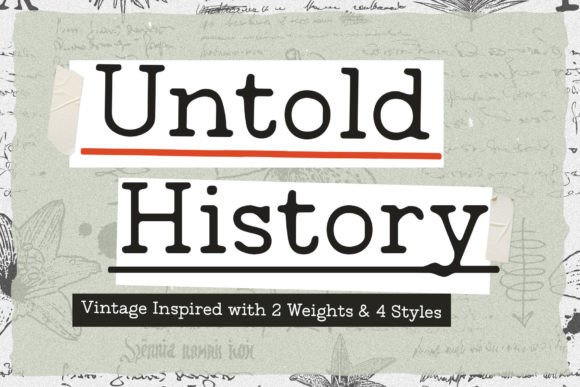
At its core, Untold History is a premium font family that understands the power of detail. While many typewriter fonts feel either too distressed or too sterile, this one strikes a careful balance. The letterforms have that familiar, slightly imperfect character of a struck key, but they are rendered with consistent weight and spacing that ensures excellent readability. It’s a serif font in the truest sense, with those subtle terminal strokes that guide the eye, making it surprisingly effective for body text in certain contexts.
What truly sets it apart are its four distinct styles: Regular, Bold, Underlined, and Inky. Each serves a different purpose in a designer's toolkit.
- Regular is your workhorse. Clean and legible, it carries the typewriter aesthetic without any visual noise, perfect for longer passages or where a subtle vintage vibe is needed.
- Bold adds necessary emphasis. It’s not a heavy, blocky bold, but rather a stronger key strike, ideal for headlines or pull quotes that need to stand out.
- Underlined offers a built-in design element. This isn't a simple digital underline; it mimics the way a typewriter's underlining mechanism would work, adding a layer of authentic detail.
- Inky is the star for authenticity. This style introduces a subtle ink bleed effect, where the edges of the letters are slightly softened and uneven, replicating the look of real ink on porous paper. It’s perfect for projects that demand a truly handcrafted, vintage appearance.
This combination makes Untold History a remarkably versatile creative font. It’s not just a single-note display type; it’s a family that can handle a range of hierarchical needs within a single project, from a book cover to its interior chapter headings.
Where This Font Truly Shines
The applications for a font like this are broad, but its personality makes it particularly effective in certain domains. As a designer or creator, knowing where its strengths lie can elevate your work.
Editorial and Publishing
For editorial design, Untold History is a natural fit. Think of magazine features on history, travel, or personal essays. Use the Inky style for feature headlines to evoke a sense of discovered letters or archived documents. The Regular style can be used for introductory paragraphs or pull quotes, setting a reflective, narrative tone before transitioning to a clean sans serif font for the main body text to ensure readability. In book design, particularly for memoirs, historical fiction, or poetry collections, it adds instant period-appropriate character to the title and chapter headings.
Branding and Logo Design
When crafting a brand identity, the typeface is a core voice. Untold History speaks to brands that value heritage, craftsmanship, and storytelling. It’s an excellent choice for:
- Craft breweries or distilleries with a vintage-inspired aesthetic.
- Independent bookshops or publishing houses.
- Artisanal coffee roasters or bakeries.
- Photography studios specializing in film or vintage processes.
- Consultants or writers who want to project a thoughtful, narrative-driven approach.
In logo design, pairing the Bold style with a simple, clean sans serif font for supporting text creates a balanced and professional mark. The key is consistency; using the font across business cards, packaging, and your website solidifies the brand's character.
Marketing and Digital Presence
In the fast-paced world of social media graphics and digital marketing, a distinct font can stop the scroll. Untold History is perfect for creating quote graphics, promotional posters for events, or email headers that need a personal touch. Its PUA encoding is a practical advantage here, allowing you to easily access special glyphs and ligatures in any design software without hassle. For web design, it’s best used judiciously—a hero headline, a featured blog post title, or a call-to-action button. Pairing it with a highly readable sans serif font for body copy on screen is a smart strategy to maintain both style and accessibility.
Making It Work: Practical Guidance for Your Project
Choosing a font is about more than just liking how it looks in a specimen sheet. It’s about evaluating its fit for your specific goals. Here’s how to approach Untold History for your next project.
Evaluate the Project’s Tone. Does your project call for authenticity, nostalgia, or a handcrafted feel? If it’s aiming for ultra-modern, minimalist, or corporate sleekness, this might not be the primary typeface. But if the brief includes words like "heritage," "story," "craft," or "personal," you’re on the right track.
Test Font Pairings. No font is an island. Untold History works beautifully in font pairing. For print and digital, try it with a geometric sans serif font like Futura or a humanist one like Gill Sans. The contrast between the detailed, vintage serif and the clean, modern sans creates a dynamic and professional visual hierarchy. Avoid pairing it with other highly decorative or script fonts, which can create visual chaos.
Mind the Readability. The Inky style, while gorgeous, can reduce legibility at very small sizes, especially on low-resolution screens. Use it for larger headings or in print where the texture can be appreciated. For body text on a website, the Regular style is a safer, more readable choice.
Leverage the Styles. Don’t just use the Regular weight. Map out your typographic hierarchy using the family. Use Bold for subheadings, Regular for body, and Inky or Underlined for special callouts or decorative elements. This creates a cohesive and polished design system.
Understand the License. As a commercial font, ensure you have the appropriate license for your use case—whether it’s for a single client project, a product for sale, or a company-wide brand identity. The value of a premium font lies not just in its design, but in the legal clarity and professional quality it provides.
Untold History is more than just a collection of letters. It’s a design asset that carries emotion and narrative. It doesn’t just display words; it frames them in a story. By understanding its personality and applying it thoughtfully, you can use this typeface to create designs that resonate on a deeper level, lighting up the past memories of your audience while firmly serving the needs of your modern project.