Crosshatcher: The Bold Sans That's More Than Scribbles
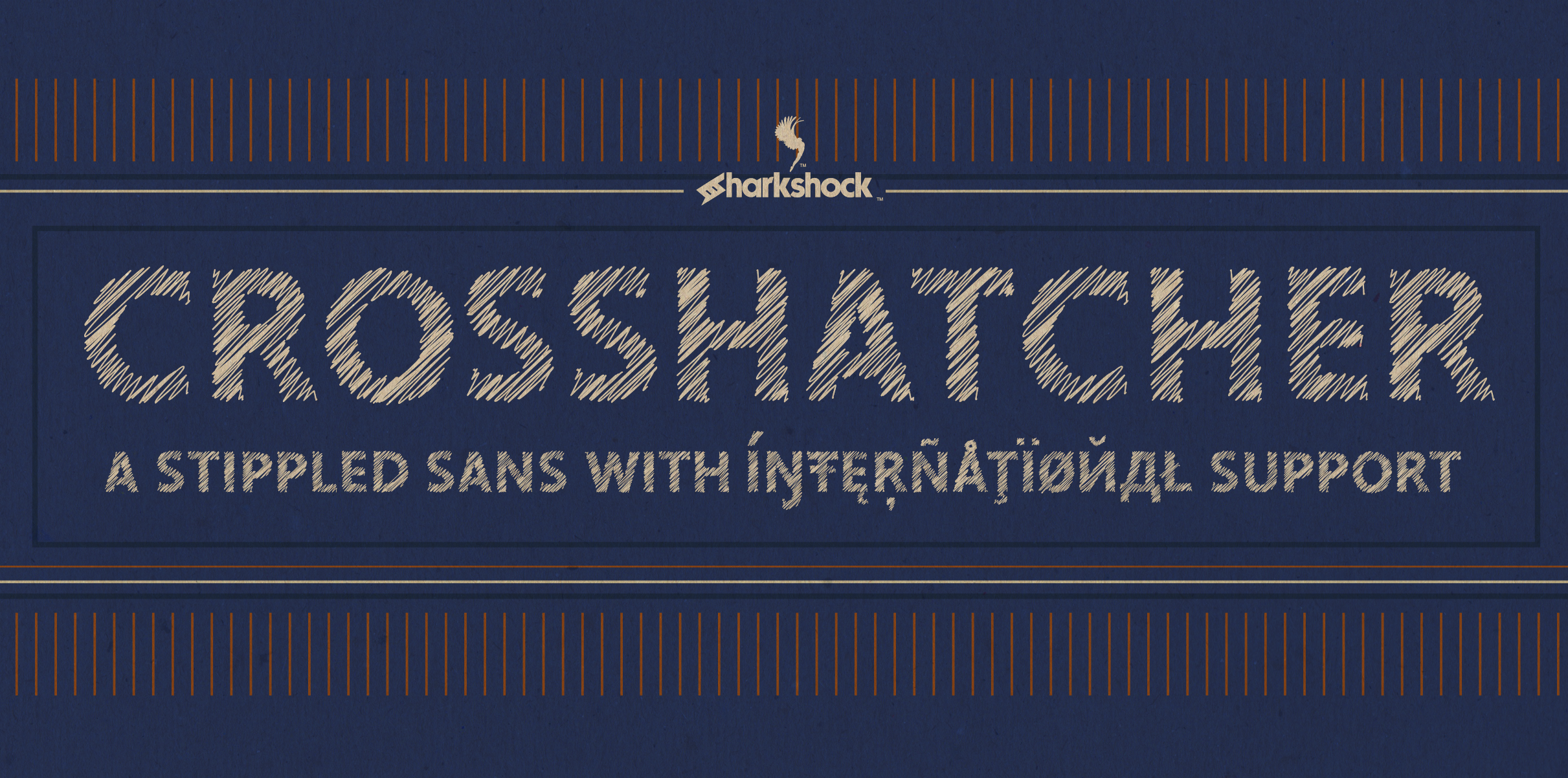
At first glance, Crosshatcher might seem like a chaotic collection of lines. It’s an all-caps sans serif typeface built on the concept of a scribble applied over a stencil. Zoom in, and you’ll see a deliberately messy, almost childish construction. This raw, energetic quality is its core personality. But step back, or use it at smaller sizes, and something interesting happens. The visual noise settles, the letterforms solidify, and it transforms into a striking, textured display font with a distinct handcrafted vibe. This duality is what makes Crosshatcher a genuinely useful tool for specific projects.
Where Does Crosshatcher Shine?
This isn't your go-to font for body copy or formal reports. Crosshatcher is a specialist, a creative font designed for high-impact, short-form applications where personality and texture are paramount. Its strength lies in grabbing attention and conveying a sense of authenticity, energy, or edgy craftsmanship.
Think about clothing and streetwear. A bold Crosshasher wordmark across a hoodie or tee immediately communicates a brand that’s raw, unpolished, and confident. It avoids the slickness of a standard sans serif font, offering something more tactile and real. Similarly, in advertisements—whether for a local skate shop, a music festival, or a craft brewery—it injects instant attitude. It’s perfect for headlines on posters, social media banners, or point-of-sale materials where you have a split second to make an impression.
For publishing, consider its use on book covers, especially in genres like young adult fiction, urban fantasy, or gritty thrillers. A title set in Crosshatcher can signal rebellion, mystery, or a story that doesn’t play by the rules. It pairs surprisingly well with a clean serif font for the author name or subtitle, creating a dynamic font pairing that balances chaos with structure. Editorial design for magazines or zines targeting a younger, alternative audience can also benefit from its bold statement in pull quotes or section headers.
Making It Work for Your Brand and Projects
Using a font like Crosshatcher effectively requires thoughtful application. Its impact on visual hierarchy is immediate and powerful. Use it for your primary headline or logo to establish the brand's tone. The texture it brings can enhance brand perception, suggesting creativity, hands-on work, or a rebellious spirit. However, consistency is key. Overusing it can dilute its effect and make designs feel cluttered. Reserve it for key moments where you want maximum impact.
When evaluating Crosshatcher for a project, ask yourself: does the brand or message need to feel authentic, energetic, or anti-corporate? If the answer is yes, it’s a strong candidate. For logo design, it can be fantastic for a brand name, but test it thoroughly at very small sizes to ensure the scribble effect doesn’t become illegible. In packaging design, it could work beautifully for a artisan product line, adding a hand-stamped, bespoke quality. For web design, limit its use to hero text or key CTAs (call-to-actions) where you want a burst of personality, paired with a highly readable font for navigation and body text.
Practical Considerations for Implementation
Before committing, always test Crosshatcher in context. Create mockups to see how its texture interacts with your color palette, imagery, and other design elements. Its readability is context-dependent. While it’s designed to come together at a distance, ensure your specific use case—like a roadside banner or a social media thumbnail—maintains clarity.
Explore the font pairing options. A simple, geometric sans serif or a classic serif can provide a calm counterpoint. Avoid pairing it with other highly decorative or handwritten fonts, as this often creates visual competition. Check the included character set: basic Latin, extended Latin, diacritics, Cyrillic, punctuation, and kerning are all there, making it a robust premium font for global projects. This is crucial for brand identity work that needs to scale.
Finally, understand the licensing. As a commercial font, ensure you have the correct license for your intended use—whether it’s for a client’s logo design, social media graphics for a business, or products for sale. Treating it as a professional design asset means respecting the terms that allow its creation and distribution.
In a world saturated with clean, digital perfection, Crosshatcher offers a valuable alternative. It’s a tool for injecting human touch and raw energy. Used strategically, it can elevate a project from ordinary to memorable, making it a worthy addition to any designer’s toolkit for the right challenge.