Thunder One: A Typeface That Commands Attention
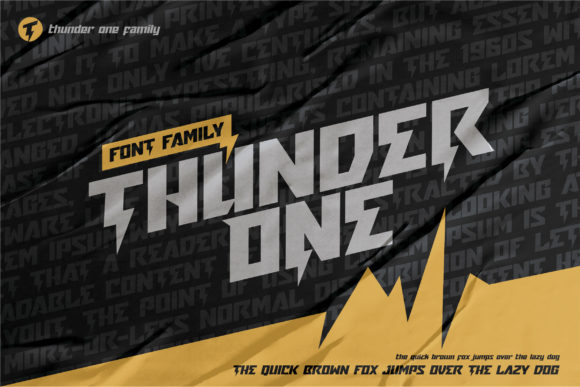
Finding a typeface that captures raw energy without sacrificing legibility is a challenge for any designer. Thunder One isn't just another display font; it is a statement piece. Its visual characteristics are defined by sharp angles, heavy strokes, and a distinct "lightning bolt" aesthetic woven into the letterforms. This modern typography choice feels inherently bold and aggressive, making it perfect for projects that need to convey power, speed, or intensity immediately. It stands apart from standard sans serif font families by adding a level of stylistic flair that is impossible to ignore.
Visual Impact and Brand Identity
When you utilize Thunder One in a project, you are doing more than just choosing a font; you are setting a mood. Its visual weight creates an immediate focal point, which is essential for establishing a strong brand identity. The font’s personality leans heavily toward the masculine and athletic, though it can be adapted for futuristic or edgy themes in web design and print. Unlike a traditional serif font, which suggests history and stability, or a script font, which implies elegance, this typeface screams action. It influences audience engagement by creating a sense of urgency and excitement before they even read the words.
For logo design, Thunder One is particularly effective. Its unique silhouettes ensure high recognition. Think about the sports industry: teams need logos that look good on a jersey, a stadium banner, and a mobile app icon. The thick, defined strokes of this premium font hold up well across various scales, maintaining visual integrity whether printed large or small. However, designers must be mindful of the "crowded" effect. Because the letters are stylized, tracking (the space between letters) often needs to be adjusted manually to ensure the word remains readable and doesn't turn into a visual blob.
Practical Applications: From Pitch to Print
The versatility of Thunder One extends well beyond sports teams, though that is certainly its sweet spot. It is a highly effective creative font for a variety of commercial applications. If you are working on packaging design for energy drinks, gym supplements, or outdoor gear, this typeface aligns perfectly with the product's promise of performance.
Here are specific areas where Thunder One excels:
- Merchandise and Apparel: It is a staple for clothing labels and graphic tees. The font style translates well to embroidery and screen printing, offering a rugged texture that looks authentic on fabric.
- Gaming and Esports: The aggressive geometry fits the aesthetic of games and gaming tournaments. It works well for stream overlays, team banners, and event posters.
- Event Promotion: For music festivals, car shows, or extreme sports competitions, Thunder One grabs attention on posters and social media graphics. Its high contrast ensures that headlines pop against busy background images.
- Club Branding: Whether it is a fitness studio or a nightlife venue, the font helps establish a modern, high-energy vibe.
Strategic Font Pairing and Hierarchy
One of the most common mistakes creatives make with display fonts like Thunder One is overusing them. This typeface is designed for impact, specifically for headlines, titles, and logos. It is generally not suitable for body copy or long-form editorial design. If you use it for paragraphs, your readers will experience eye fatigue very quickly due to the complex shapes of the letters.
Instead, use Thunder One to create a strong visual hierarchy. Pair it with a clean, neutral sans serif font or a simple serif for the body text. For example, a bold heading in Thunder One followed by a paragraph in Roboto or Open Sans creates a balanced contrast. This approach allows the headline to do the heavy lifting—drawing the eye—while the secondary font provides the necessary information with ease.
When evaluating font pairing, test how the x-height and weight of your secondary font match the vibe of Thunder One. You want a contrast in style, but a harmony in mood. Avoid pairing it with other decorative fonts like a handwritten font, as this will create visual chaos and confusion for the viewer.
Licensing, Formats, and Technical Considerations
Before integrating Thunder One into your workflow, it is crucial to verify the licensing terms. As a commercial font, it typically requires a license for commercial use, whether you are a freelance designer, a small business owner, or a large agency. Always check if the license covers digital ads, print merchandise, and web design (via @font-face).
From a technical standpoint, review the character map of the font. High-quality design assets often include alternates, ligatures, or stylistic sets. Thunder One may offer variations in its lightning motifs or swashes that can add a unique touch to your logo design. Additionally, always test the font on different devices. A typeface that looks crisp on a high-resolution monitor might lose detail on a lower-quality screen or when printed on textured paper. Ensure that the font renders correctly and that the kerning is consistent across browsers if you are using it for digital projects.
Ultimately, Thunder One is a tool for volume. It is meant to turn up the intensity of your design. Used thoughtfully, it can transform a standard layout into a memorable visual experience that resonates with an audience looking for power and style.