Strawberry Dreams: A Sweet Font Duo for Timeless Charm
There’s a particular kind of warmth that comes from a design that feels both familiar and fresh. It’s the feeling of a handwritten note on textured paper, the friendly curve of a letter on a chalkboard menu, or the nostalgic appeal of a vintage fruit crate label. This is the territory where Strawberry Dreams lives. More than just a script font, it’s a carefully crafted font duo designed to inject genuine personality and a touch of handcrafted sweetness into your projects. For designers, entrepreneurs, and creators, it offers a versatile toolkit for building brand identity that feels authentic and engaging.
The Anatomy of a Dream: Deconstructing the Font’s Personality
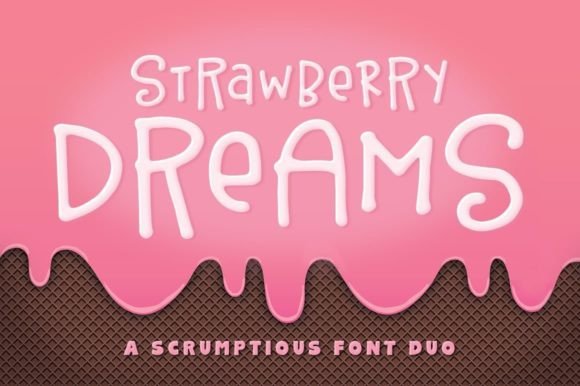
At its heart, Strawberry Dreams is a handwritten font with a flowing, connected baseline. The letters dance with a natural, unforced rhythm, avoiding the stiff perfection of digital scripts. Its visual characteristics are defined by soft, rounded terminals, gentle swashes, and a consistent stroke weight that ensures legibility even at smaller sizes. The personality is one of approachable elegance—it’s sophisticated enough for a boutique logo yet casual enough for a friendly blog header. This duality is its greatest strength, making it a creative font that bridges the gap between professional polish and personal touch.
The true magic, however, lies in its functionality as a font duo. Paired with its complementary block font—a sturdy, clean sans-serif or serif companion—you gain a complete typographic system. The block font provides essential structure and contrast, perfect for subheadings, body text, or calls to action. This pairing strategy is fundamental to effective visual hierarchy, allowing you to guide the viewer’s eye and create clear, readable layouts. The alternates font, offering four variations of each letter, is a game-changer. This feature allows you to avoid the repetitive look common in many script typefaces, enabling you to craft logos, titles, and headlines that feel uniquely hand-lettered every time.
Practical Applications: Where Strawberry Dreams Truly Shines
Understanding a font’s ideal use cases is key to leveraging its full potential. Strawberry Dreams excels in projects where warmth, authenticity, and a personal connection are paramount. Think beyond the obvious and consider these practical applications:
- Branding & Logo Design: For small businesses in the lifestyle, food, wellness, or artisanal space, this font is a natural fit. A bakery, a handmade soap company, or a wedding planner can build a brand identity that feels inviting and trustworthy. Use the script for the primary logo mark and the block font for the tagline or website URL to create a balanced, professional lockup.
- Editorial & Publishing: In editorial design, it’s perfect for chapter titles, pull quotes, or feature story headers in magazines and blogs. It adds a human element that draws readers in, making content feel more like a conversation than a broadcast.
- Packaging & Labels: The font’s nostalgic charm makes it ideal for packaging design. Use it on product labels for jams, crafts, or specialty goods to evoke a sense of homemade quality and care. The multiple letter variations help create unique, eye-catching labels that stand out on a shelf.
- Digital & Social Media: For web design, it works beautifully for hero text, accent headers, or promotional banners. On social media graphics, it can make quotes, announcements, and Instagram Stories feel more personal and engaging, boosting audience interaction.
Remember, the goal is to use it strategically. As a display font, it’s meant for headlines and focal points, not long paragraphs of body copy. Pairing it with a simple, highly legible sans serif font or a clean serif font for supporting text is not just a recommendation—it’s a necessity for maintaining readability and professionalism.
Making It Work: Guidance for Designers and Creators
Choosing a premium font is an investment, and ensuring it’s the right tool for the job is crucial. Here’s a practical framework for evaluating and implementing Strawberry Dreams in your workflow.
First, assess the project’s tone. Does your client or brand voice call for warmth, nostalgia, and approachability? If the brief requires stark minimalism, futuristic sleekness, or corporate neutrality, this might not be the right typeface. Its strength is in conveying personality, so ensure that aligns with the project’s core message.
Next, test the font pairings rigorously. Don’t just glance at it in a design tool. Create a mockup with actual project content—your logo text, a sample headline, and a paragraph of body copy. See how the Strawberry Dreams script interacts with its block companion and your chosen body font. Check the contrast in weight, style, and x-height. The pairing should feel harmonious, not competing. The included alternates are a powerful feature; experiment with them to create unique letter combinations for key words in your logo or title.
Finally, consider the practicalities. If your project is commercial, verify the font’s commercial font license covers your intended use—whether for client work, merchandise, or digital products. For web design, ensure you have the correct webfont files and that the font renders well across different browsers and screen sizes. Test its readability on various backgrounds and at different scales, especially for mobile views.
In the end, Strawberry Dreams is more than a collection of glyphs; it’s a design asset that can help tell a story. Its value lies in its ability to make a design feel considered, crafted, and human. When used thoughtfully, with attention to context, pairing, and readability, it becomes a reliable tool for creating work that doesn’t just look good, but feels right. It’s about building connections, one beautifully set word at a time.